Northern Tanzania · Wildlife & landscape
A volcanic landscape shaped by time, weather and wildlife — one of the most distinctive stops on any northern Tanzania safari.
Ngorongoro Crater safari
Located in northern Tanzania within the Ngorongoro Conservation Area, Ngorongoro Crater is a vast, intact volcanic caldera known for its dramatic rim, open grasslands, wetlands and high concentration of wildlife. The crater floor supports varied habitats where visitors may see lions, elephants, buffalo, zebras, wildebeest, hippos and, with luck, the endangered black rhinoceros.
A Ngorongoro Crater safari usually includes a guided game drive down to the crater floor, where changing habitats create opportunities to observe wildlife throughout the day. The crater is about 20 kilometres across and roughly 600 metres deep. Your experience depends on the weather, wildlife movements, time available and the conservation area’s visitor rules.

At a glance
A key stop on Tanzania’s northern safari circuit, west of Arusha and adjacent to the Serengeti ecosystem.
Sightings vary with conditions and luck — the crater is never empty, but no species is guaranteed.
About 20 km across and roughly 600 m deep, with grasslands, wetlands, woodland and a soda lake.
Lion, elephant, buffalo, leopard and black rhino all live here — seeing all five in one visit is not guaranteed.
Things to do
Whether you are visiting Tanzania for the first time or returning for another safari, Ngorongoro offers a memorable mix of wildlife viewing, dramatic scenery and natural history.
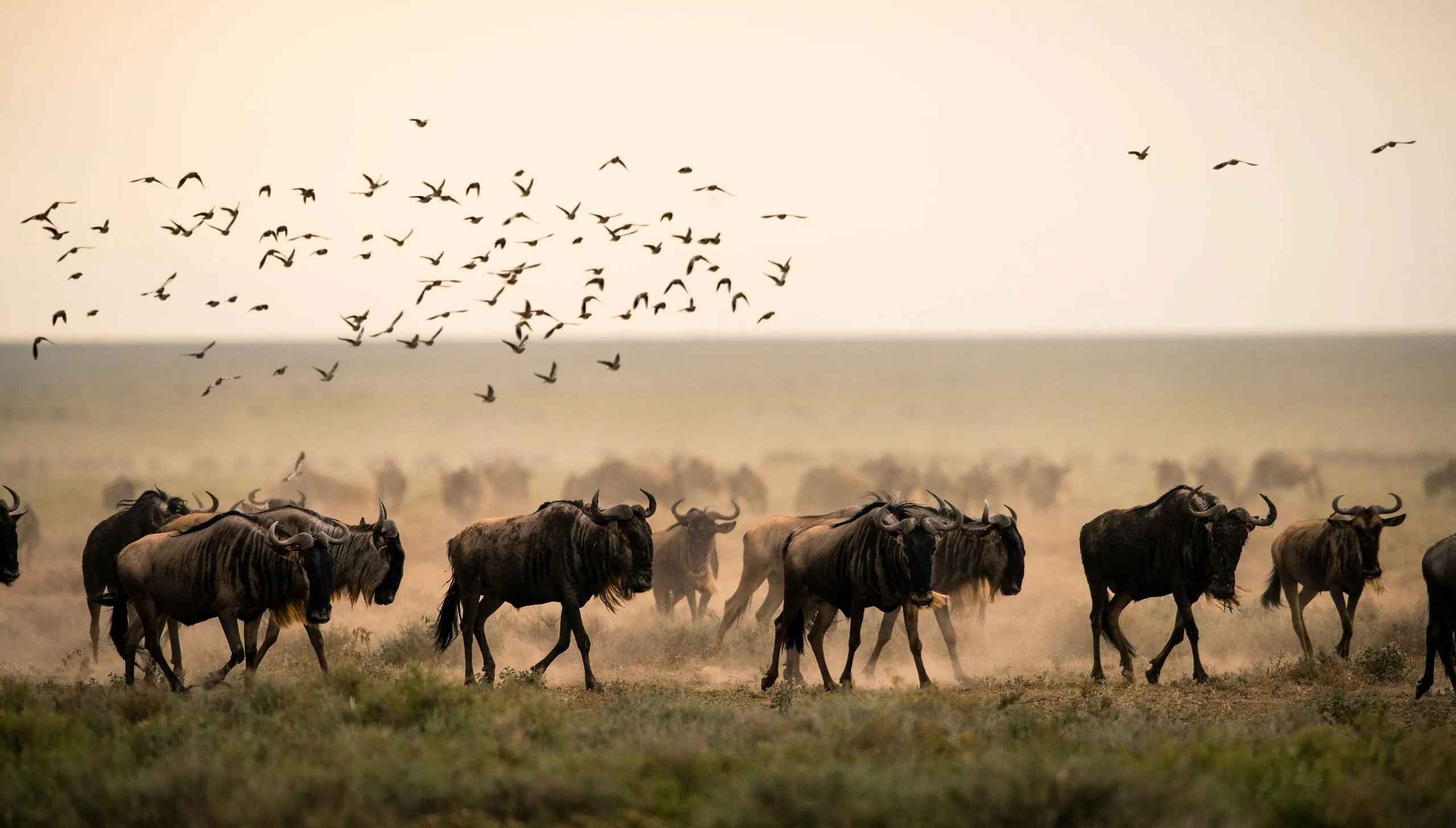
Descend with your guide to explore grasslands, marshes, woodland and lake habitats. Zebras, wildebeest, buffalo, elephants, lions and hyenas are commonly seen; animals are wild, so sightings are never guaranteed.
Ngorongoro is one of northern Tanzania’s best-known areas for the Big Five. Black rhinos are present but elusive.
Pause at viewpoints along the crater rim. Morning light, mist and weather transform the scenery — bring a warm layer and keep your camera ready.
The wider conservation area is home to Maasai communities, and Olduvai Gorge lies on its western side. Visits are arranged with local hosts.
Landscape, wildlife & conservation
Ngorongoro Crater was formed when a large volcano collapsed inward. Today, its steep walls surround a broad crater floor with grasslands, seasonal wetlands, woodland and a soda lake. These habitats support a wide range of wildlife and make the crater one of Tanzania’s most distinctive safari landscapes.
As you explore with a guide, you may see herds of zebra and wildebeest grazing across the plains, buffalo moving through open country, hippos in wetland areas and predators such as lions and hyenas. The endangered black rhinoceros also lives in the conservation area, although sightings are not guaranteed. Every game drive is different because animals move freely through their natural environment.
The wider conservation area is also important for its cultural heritage and the relationship between people, livestock and wildlife. Visitors should follow their guide’s instructions, respect wildlife viewing distances and help protect this special landscape for future generations.
Plan your visit
Many itineraries allow most of a day for the crater visit, including the descent, wildlife viewing and ascent. Your schedule depends on where you stay, the route and current conservation area regulations.
The crater rim sits at high elevation and can feel cold, especially early in the morning. Bring layers, sun protection and comfortable clothing.
Ngorongoro can be combined with Serengeti National Park, Tarangire, Lake Manyara and cultural or historical stops such as Olduvai Gorge.
Crater service fees, conservation fees and park entrance are set by the authorities and revised periodically. We confirm current rates in your written quotation.
Questions
In northern Tanzania, within the Ngorongoro Conservation Area, west of Arusha and near the Serengeti ecosystem. It is a major destination on the northern safari circuit.
It can be visited throughout the year. The best time depends on your travel plans, preferred weather and wider itinerary; conditions and sightings vary by season and day.
Ngorongoro offers a chance to look for lion, leopard, elephant, buffalo and black rhino — but no guide or operator can guarantee all five on a single visit.
The crater visit is commonly planned as a full or substantial part of one day. If you are travelling from Arusha or combining Ngorongoro with Serengeti, allow extra time for transfers.
Yes — most often with Serengeti, Tarangire and Lake Manyara. The best order depends on your arrival point, trip length and travel dates.
Plan your journey
Message our Arusha team on WhatsApp or by email — real itineraries, honest answers and clear quotations, usually within one working day.