Northern Tanzania · Endless plains
Wild landscapes shaped by wildlife, weather and the rhythm of the seasons — and a safari that changes with them.
A classic African safari
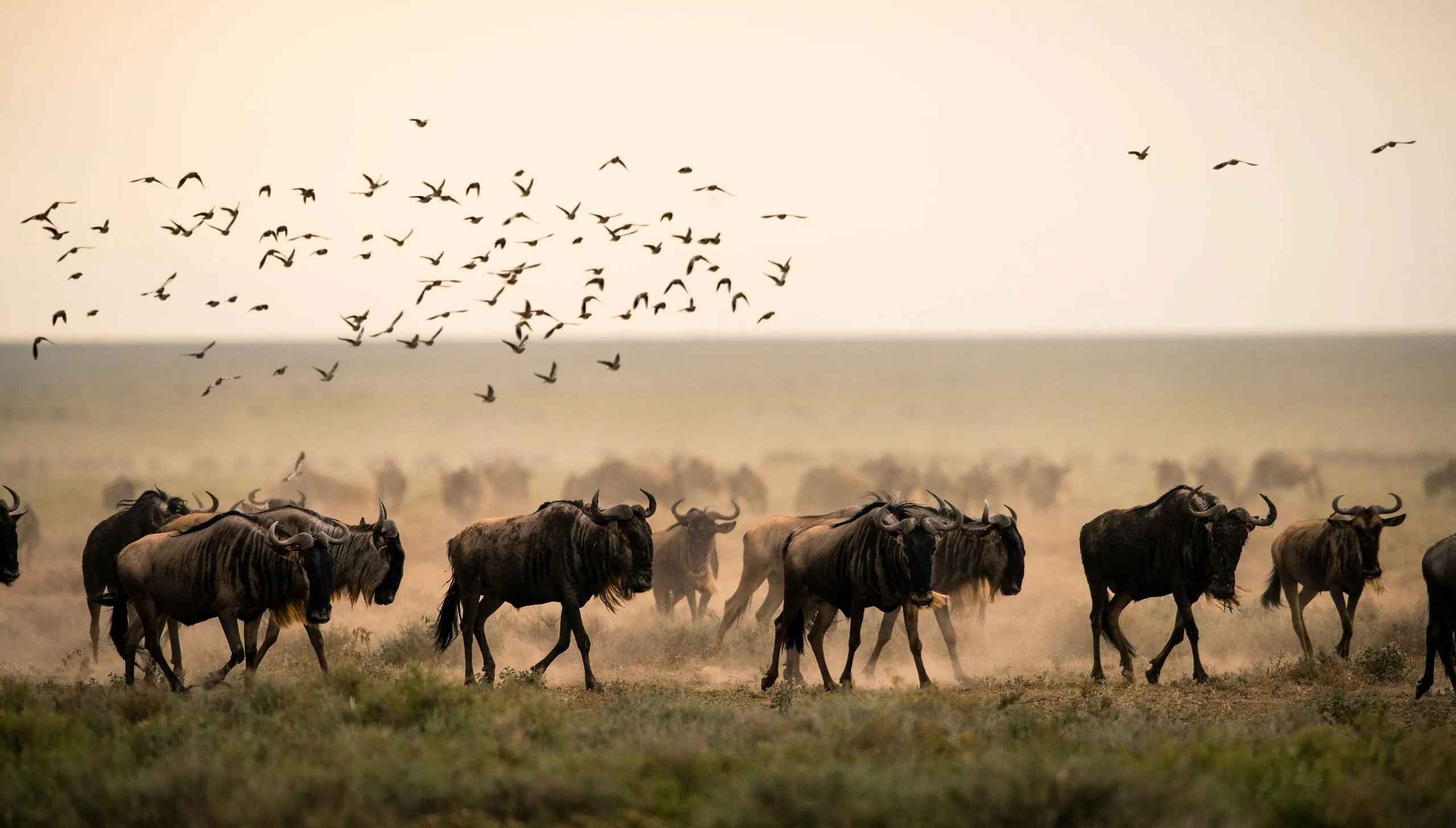
Located in northern Tanzania, Serengeti National Park is known for its vast savannahs, diverse wildlife and the annual movement of wildebeest, zebra and gazelles across the wider Serengeti ecosystem. Its landscapes range from open grasslands to rocky kopjes, river valleys and wooded areas, each offering different opportunities to observe wildlife.
Every safari here has its own character. Early-morning drives can reveal animals becoming active in the cool air, while afternoon journeys offer time to explore new parts of the plains. With a thoughtful route and experienced local guidance, your Serengeti safari can be shaped around your interests, travel dates and pace.
At a glance
Part of Tanzania’s celebrated northern safari circuit, within the wider Serengeti ecosystem.
Wildlife viewing changes with location and season — the park is never empty.
The Great Migration crosses the wider ecosystem; the herds are not in one place all year.
Open plains, kopjes, rivers and woodland, each with different species and light.
Things to do
Whether it is your first African safari or a return to Tanzania, the Serengeti offers different ways to connect with the landscape.
Explore the plains with a knowledgeable guide and look for lions, elephants, giraffes, buffalo, antelope and other wildlife. Each drive follows current conditions and animal activity.
Follow the seasonal movement of vast herds of wildebeest and zebra. The best area depends on the time of year, recent rainfall and the herds’ movement.
Enjoy the changing light over the plains, when the landscape takes on softer colours.
A dawn balloon flight over the plains, with a bush breakfast on landing — optional, and weather dependent.
When to visit
The Serengeti is a year-round destination, but wildlife patterns and landscapes vary throughout the year. The Great Migration is a natural movement, not a fixed event, so sightings cannot be guaranteed on specific dates. Plan around the experience you hope to have, and allow for seasonal variation.
For migration-focused travel we usually suggest seven days with two or three nights in the park, so a bad day does not define the trip.

Plan your safari
Allow enough time to explore the areas included without rushing between destinations. Your starting point and onward plans help determine the best length.
The Serengeti is extensive. Choosing the right region for your dates improves your chances of seeing the wildlife experiences that interest you most.
The Serengeti can be part of a northern safari with Ngorongoro Crater, Tarangire and Lake Manyara, depending on your schedule.
Driving from Arusha takes a full day each way. Scheduled flights to Seronera or Kogatende save two days but add cost and luggage limits.
Questions
In northern Tanzania, forming part of the wider Serengeti ecosystem, which extends beyond the park boundaries.
It can be visited throughout the year. The best time depends on your interests, the region you plan to visit and seasonal wildlife movements.
The park supports lion, leopard, elephant, buffalo and rhinoceros. Sightings depend on location, conditions and luck; no wildlife encounter can be guaranteed.
It depends on your route, budget and interests. More time allows you to explore different areas without rushing.
Yes — many itineraries combine it with Ngorongoro Crater, Tarangire or Lake Manyara, depending on time and arrival point.
Plan your journey
Message our Arusha team on WhatsApp or by email — real itineraries, honest answers and clear quotations, usually within one working day.